
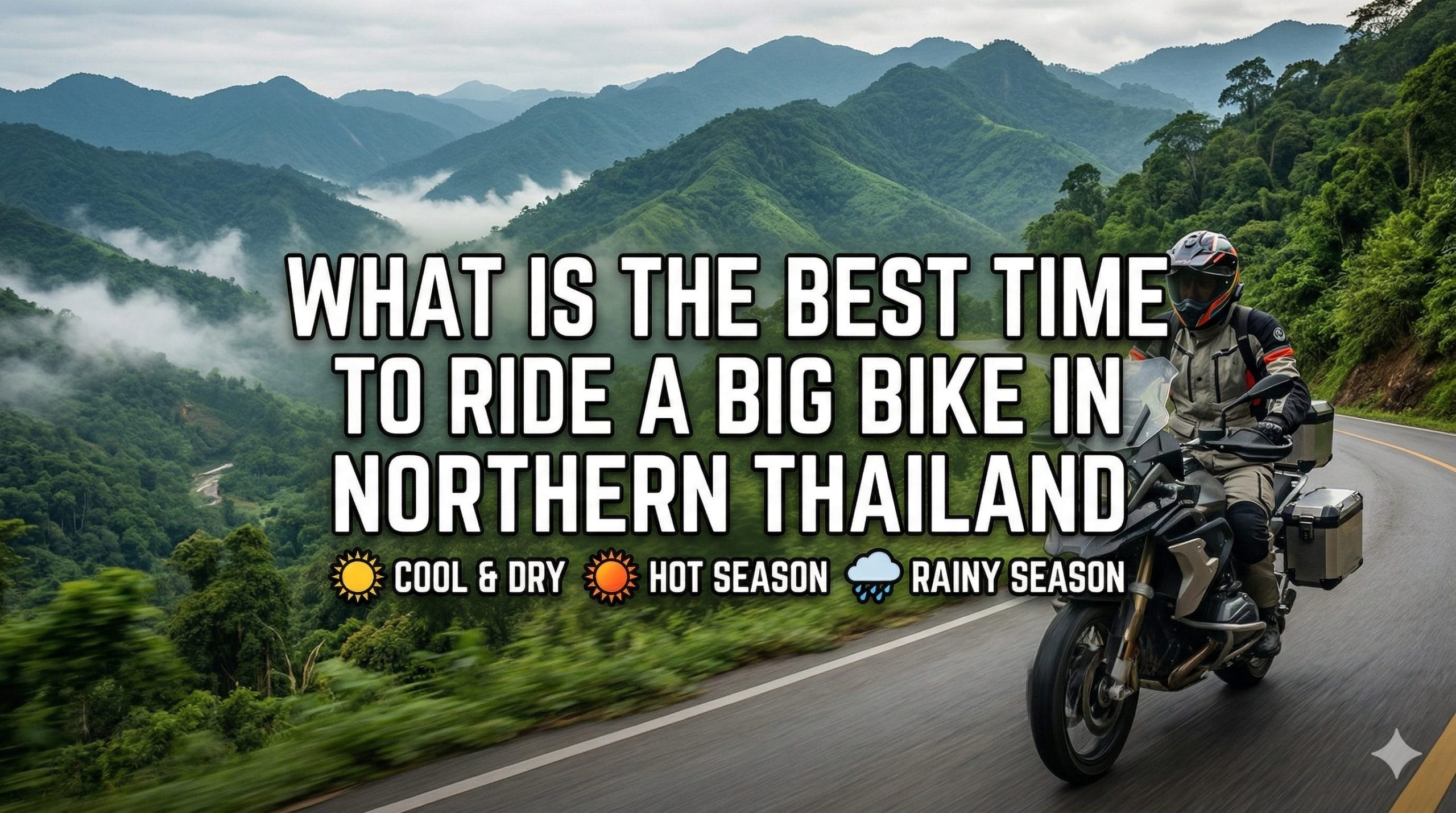
The best time to ride a big bike in Northern Thailand is between November and February. During this peak cool and dry season, daytime temperatures average a comfortable 25°C to 30°C, mountain roads remain completely dry, and the lush monsoon greenery creates spectacular, highly visible riding conditions across the highlands.
Understanding the region’s three distinct weather systems is critical for planning a safe and enjoyable motorcycle tour. Northern Thailand’s microclimates dictate road safety, visibility, and physical comfort.
| Season | Operational Months | Avg. Temp Range | Riding Conditions & Logistics |
| Cool & Dry (Peak) | November – February | 15°C – 30°C | Perfect tire grip, clear visibility, dry roads. High tourist volume requires early hotel and bike bookings. |
| Hot & Smoky | March – May | 30°C – 42°C | Severe air pollution (PM2.5), low visibility, extreme heat fatigue. Highly discouraged for touring. |
| Rainy / Monsoon | June – October | 24°C – 32°C | Wet tarmac, unpredictable afternoon downpours, mud on rural routes, highly vibrant landscapes. |
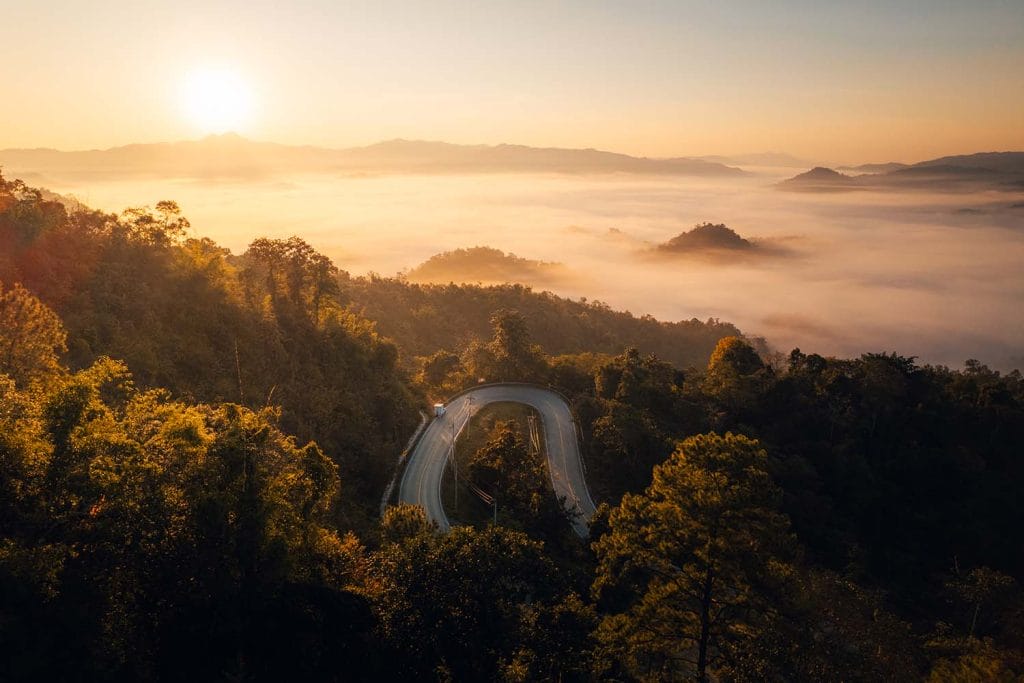
When Exactly Is the Peak Motorcycling Season in Northern Thailand?
November through February constitutes the absolute peak motorcycling season in Northern Thailand. Riders experience clear blue skies, zero precipitation, and crisp mountain mornings dropping to 10°C. These optimal weather conditions guarantee maximum tire grip on famous routes like the Mae Hong Son Loop and allow for comfortable all-day touring.
Because the weather is flawless, preparation shifts to handling the logistics of high season. Chiang Mai serves as the gateway for Northern Thailand tours, and the influx of international riders means resources stretch thin.
-
Apparel Logistics: Start rides at 7:00 AM wearing a thermal liner or windbreaker under a mesh CE-armored jacket. Pack away the layers by 10:30 AM when valley temperatures rise.
-
Accommodations: Remote mountain towns like Pai and Mae Hong Son operate near 100% hotel capacity. Secure lodging at least 60 days prior to arrival.
-
Pacing: Daylight hours are shorter in December and January. Plan to arrive at your destination by 4:30 PM to avoid riding on unlit mountain passes after dark.
Which Months Should Riders Avoid the Thai Highlands?
Motorcyclists should strictly avoid riding Northern Thailand from March to May due to the intense burning season and extreme heat. Agricultural fires severely reduce visibility, cause hazardous air pollution, and push temperatures above 40°C. Additionally, the peak monsoon months of August and September bring dangerous landslides and slippery tarmac.
Riding outside the peak season introduces severe risks that compromise both the safety and enjoyment of the journey:
-
The Burning Season (March to May): Local farmers burn crop residue, creating a blanket of smog over the valleys. PM2.5 levels routinely exceed hazardous thresholds, causing respiratory distress inside a motorcycle helmet. Viewpoints offer zero visibility.
-
The Peak Monsoon (August to September): While riding in the rain is manageable, the heavy downpours wash red clay and debris onto the apexes of high-speed corners. Sections of Route 1081 in Nan are notorious for localized washouts during these two months.
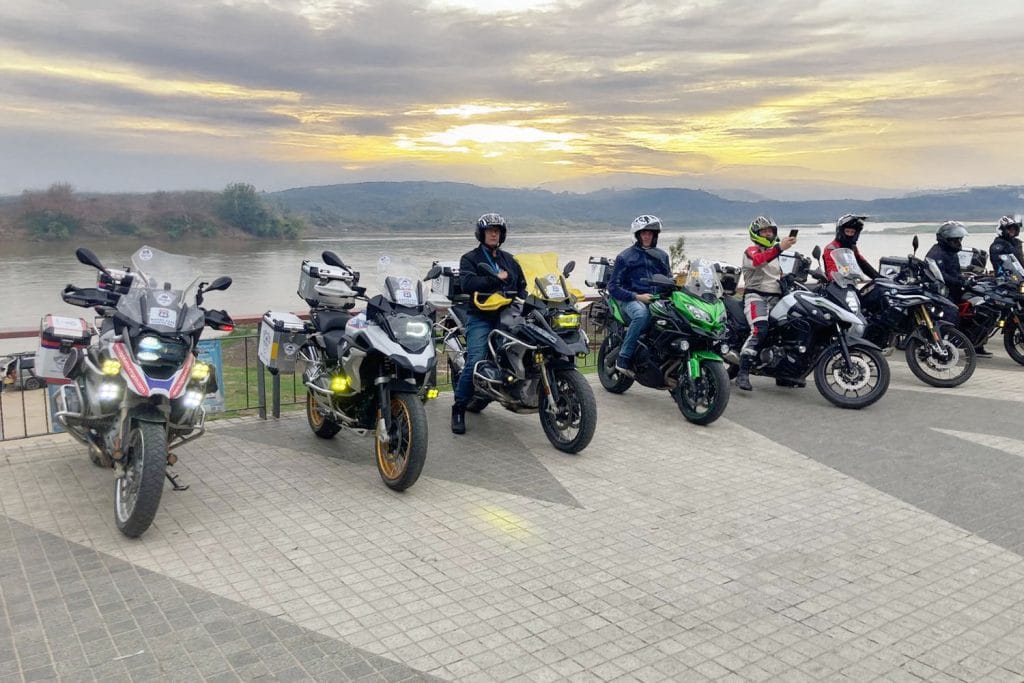
What Are the Essential Motorcycle Routes in the Northern Provinces?
The Mae Hong Son Loop and the Nan Loop stand as the two most essential motorcycle routes in Northern Thailand. The Mae Hong Son Loop delivers 1,864 tight curves over 600 kilometers, while the Nan Loop via Route 1148 offers sweeping, high-speed mountain passes with impeccable asphalt and minimal traffic.
Depending on your time constraints, these heavily vetted circuits offer the best infrastructure and pavement quality in the country:
-
The Mae Hong Son Loop (Routes 1095 & 108): A 4-day, 600km clockwise or counter-clockwise circuit from Chiang Mai. It features intense elevation changes, dense jungle canopies, and the iconic roadside certificate to prove you conquered its 1,864 bends.
-
The Nan Loop (Routes 1148 & 1081): A 3-day eastern circuit renowned for “Curve Number 3” and the Bo Kluea salt pits. The asphalt here is famously grippy and wide, heavily favored by riders of 1000cc+ sports touring bikes.
-
The Golden Triangle Route: A 3-day ride north to Chiang Rai, navigating the Mekong River banks where the borders of Thailand, Laos, and Myanmar intersect. Features long, relaxing straightaways interspersed with sweeping curves.
Epic Northern Thailand Big Bike Tour – Nan Loop, Golden Triangle & Mae Hong Son Adventure Ride
How Indochina Motorbike Tours Elevates Your Journey
Indochina Motorbike Tours transforms your Northern Thailand motorcycling adventure through expert logistical support and premium fleet access. Our seasoned local road captains provide meticulously planned GPS routes, immediate mechanical breakdown assistance, and exclusive access to hidden mountain lodges, ensuring an uninterrupted, world-class riding experience tailored to your specific skill level.
Attempting to navigate foreign roads, coordinate cross-province logistics, and source reliable motorcycles independently can consume valuable travel time. By riding with our guided operations, you secure:
-
Guaranteed High-Tier Fleet: Pre-reserved, meticulously maintained touring motorcycles equipped with hard luggage and fresh rubber.
-
Support Vehicles: A trailing 4×4 carries your heavy luggage, spare parts, and cold refreshments, allowing you to ride unencumbered.
-
Cultural Access: Bypass the tourist traps with curated stops at authentic hill-tribe villages and locally renowned roadside culinary spots.
FAQ
Question 1: Do I need an international driving permit to ride in Northern Thailand?
Answer: Yes, foreign riders must carry an International Driving Permit (IDP) endorsed for motorcycles, alongside their home country motorcycle license. Failure to present an IDP at frequent police checkpoints results in fines ranging from 500 to 1,000 THB and invalidates standard travel insurance policies in case of an accident.
Question 2: Is the Mae Hong Son Loop safe for beginner motorcyclists?
Answer: No, the Mae Hong Son Loop is not recommended for beginners. The route contains 1,864 tight hairpin turns, steep elevation changes, and occasional hazards like roaming livestock or debris. Riders should have minimum 2 years of experience on heavy motorcycles before attempting these demanding mountain roads.
Question 3: Should I book my motorcycle rental in Chiang Mai in advance?
Answer: Absolutely. During the peak November to February riding season, highly sought-after adventure motorcycles like the Honda CB500X or Suzuki V-Strom are reserved months ahead. Walk-in customers frequently find rental shops completely sold out of 500cc+ motorcycles, leaving only small-capacity scooters available. Book at least 90 days prior.
Question 4: What protective riding gear is necessary for Thailand’s climate?
Answer: Pack a ventilated CE-armored mesh jacket for daytime heat, alongside a removable thermal liner or windbreaker for mountain mornings where temperatures drop below 15°C. Full-face helmets, Kevlar-lined riding jeans, summer riding gloves, and sturdy over-the-ankle boots are mandatory for safe touring on Thai highways.
Question 5: Can I cross the border from Northern Thailand into Laos on a rented bike?
Answer: Crossing the border into Laos on a rental motorcycle requires specific authorization. Most standard rental agreements prohibit border crossings. However, specialized touring agencies like Indochina Motorbike Tours arrange pre-approved cross-border touring bikes, handling all complex customs paperwork, temporary import documents, and mandatory third-party insurance for Laos.