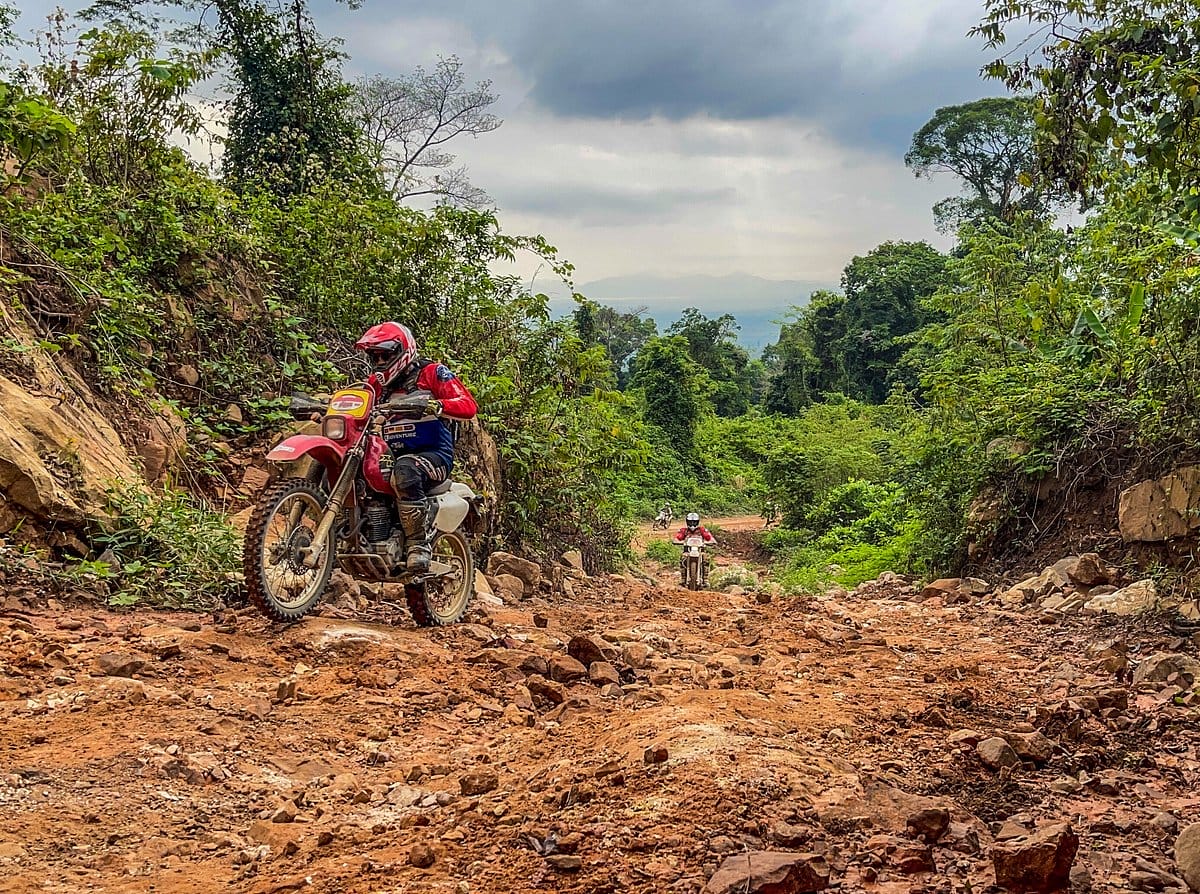
One minute you are rolling out of Chiang Mai on smooth tarmac, the morning air still cool, the mountains sitting quietly in the distance. Then the guide turns off the main road, the engine note changes, the dust rises, and suddenly you are climbing into another Thailand — one of red dirt tracks, bamboo shade, single trails, steep passes, river crossings, sharp curves, smoky village kitchens, jungle ridgelines and wild tracks that never appear on ordinary tourist maps.
This is the Thailand that adventure riders come looking for.
Not the Thailand of postcards alone, but the living, breathing backcountry: hill-tribe villages tucked into mountain folds, monks walking barefoot at sunrise, farmers carrying baskets through terraced fields, forest trails still wet from last night’s rain, and long twisted or winding roads that seem to roll endlessly from one blue mountain to the next.
A Thailand Dirt Bike Tour is not just about riding a motorcycle. It is an adventure ride into the soul of the country — a journey where the machine, the rider, the land and the local people become part of the same story.
For international riders from Australia, New Zealand, the UK, Europe, the US and beyond, Thailand has become one of Southeast Asia’s most exciting destinations for off-road riding. The country offers a rare combination: reliable travel infrastructure, warm hospitality, beautiful mountain scenery, technical dirt tracks, jungle single trails, comfortable hotels, tasty food and experienced local guides who understand the trails better than any GPS ever could.
Northern Thailand is especially famous among riders. Chiang Mai is widely used as a starting point for motorcycle journeys into Pai, Mae Hong Son, Chiang Dao, Mae Chaem and the remote mountain borderlands. The Mae Hong Son Loop alone is known as a legendary motorcycle route of roughly 600 km, famous for its thousands of bends, mountain views and winding roads through the north.
But if you are thinking about joining a dirt bike tour in Thailand, you probably have many questions.
What kind of rider do you need to be?
Is it suitable for beginners?
What bikes are used?
Are the trails too muddy in the rainy season?
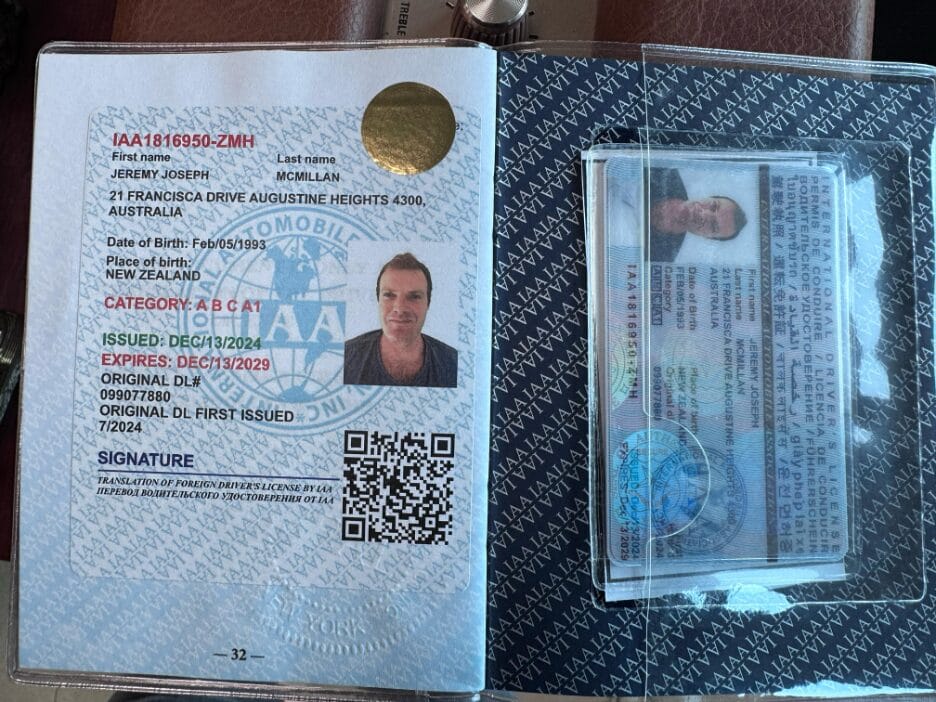
Do you need an International Driving Permit?
What is included in a guided tour?
Should you choose Chiang Mai, Pai, Pattaya or Kanchanaburi?
And most importantly — what does the experience really feel like?
This guide is written for riders who want practical answers, not empty travel clichés. It is for those who want to understand the routes, the terrain, the culture, the risks, the rewards and the real spirit of a Thailand offroad motorcycle tour before they put their boots on the pegs and follow the guide into the jungle.
Thailand has a special rhythm for motorcycle riders. The roads are lively but scenic, the mountain routes are dramatic, and the countryside changes quickly from busy towns to quiet valleys, from rice fields to teak forests, from smooth curves to muddy roads within a single morning.
For dirt bike riders, this variety is gold.
A good Thailand dirt bike tour can combine many styles of riding in one day: small rural backroads, red clay dirt tracks, narrow single trails, rocky climbs, steep descents, forest paths, river crossings, plantation routes and scenic mountain passes. That variety keeps the ride exciting without making every hour brutally technical. Thailand dirt bike tour
A Country Built for Adventure Riding
Thailand works well for adventure riders because it offers both wilderness and comfort. You can spend the day riding through jungle trails and remote hill-country tracks, then finish in a comfortable guesthouse or boutique hotel with a hot shower, cold beer and a plate of spicy northern Thai food.
This matters. Many riders want an EPIC RIDE, but they do not necessarily want to suffer every night. Thailand gives you that beautiful balance: wild enough to feel adventurous, organized enough to feel safe.
In Northern Thailand, operators often design guided routes around Chiang Mai, Pai, Chiang Dao, Mae Hong Son and remote border areas because these regions offer jungle trails, mountain ridgelines, river crossings and village backroads. Local enduro operators in Chiang Mai describe the area as a mix of steep climbs, jungle single tracks, remote mountain villages and river crossings — exactly the kind of terrain that attracts international dirt bike riders.
A Deep Cultural Landscape, Not Just a Riding Playground
One of the biggest mistakes riders make is thinking of Thailand only as a place for trails. The best dirt bike tours here are not only about speed, mud and technical climbs. They are also cultural journeys.
In the northern mountains, you may pass through villages of Karen, Hmong, Lisu, Akha or Shan communities. You may see wooden houses on stilts, small temples hidden under forest trees, old border routes, tea plantations, cornfields, rice terraces and roadside spirit houses decorated with flowers and incense.
A good guide does not simply lead you from point A to point B. He helps you understand where you are riding. He knows which trails are open, which village roads need respect, where to stop for local coffee, where the mud becomes dangerous after rain, and when to slow down because children, buffaloes or dogs may appear around a blind corner.
That local knowledge transforms a dirt bike ride into a meaningful travel experience.
Thailand is large and diverse, but for dirt bike and off-road motorcycle tours, a few regions stand out clearly. Best Regions for Thailand Dirt Bike Tours
Chiang Mai: The Heart of Northern Thailand Dirt Bike Riding
Chiang Mai is the natural base for many Thailand dirt bike tours. It has a strong travel infrastructure, easy flight access, good hotels, repair services, experienced guides and quick access to mountain trails.
Within a short ride from the city, you can move from urban roads into rural backroads, then into forest trails and mountain tracks. This is why Chiang Mai is so popular for both short enduro rides and multi-day offroad motorcycle tours.
What Makes Chiang Mai Special?
Chiang Mai is not only convenient. It is surrounded by serious riding terrain. Depending on the route and season, riders can experience:
• Dirt tracks through farmland and forest
• Narrow single trails under jungle cover
• Steep climbs and loose descents
• Twisted mountain roads with sharp curves
• Remote hill-tribe villages
• River crossings in the green season
• Scenic viewpoints over northern valleys
• Mixed riding for beginner, intermediate and advanced levels
For first-time visitors, Chiang Mai is often the best introduction to Thailand dirt bike touring because it offers flexibility. If a group is mixed in skill level, a good operator can adjust the day’s trail difficulty. If the weather changes, guides can reroute. If someone is tired, there are usually easier escape routes back to town.
This flexibility is one of the strongest selling points for international riders.
Pai: Bohemian Town, Wild Trails and Mountain Riding
Pai has long been known as a relaxed mountain town, but for riders it is more than cafés and sunset viewpoints. The area around Pai offers winding mountain roads, dirt routes, forest trails and access to remote valleys.
The ride from Chiang Mai toward Pai is already famous for its curves. For big-bike riders, it is a beautiful tarmac experience. For dirt bike riders, the real attraction lies beyond the main road — in the dirt tracks, village routes and wild tracks surrounding the valley.
Who Should Ride Around Pai?
Pai works especially well for riders who want a mix of scenic riding and adventurous terrain. It is suitable for:
• Intermediate riders looking for varied trails
• Experienced riders who enjoy technical sections
• Travelers who want a relaxed mountain-town atmosphere after riding
• Groups wanting a combination of culture, nature and dirt bike fun
A Chiang Mai to Pai dirt bike tour can feel like a transition from civilization into the wilder north. You leave the city behind, climb through the mountains, cross valleys, ride dirt sections, then arrive in Pai with dust on your boots and a story already forming in your head.
Mae Hong Son: Winding Roads, Borderland Atmosphere and Mountain Soul
Mae Hong Son is one of Thailand’s most atmospheric mountain provinces. It feels quieter, more remote and more deeply connected to the borderland culture of the north.
Many riders know the area because of the Mae Hong Son Loop, a classic motorcycle route starting and ending in Chiang Mai. Travel guides describe the loop as around 600 km and recommend taking several days to experience it properly rather than rushing through it.
For dirt bike riders, the loop itself is only part of the story. The real magic often begins when you leave the famous road and follow smaller tracks into the hills.
Riding Character Around Mae Hong Son
Expect a mix of:
• Long twisted or winding roads
• Sharp curves and steep passes
• Mountain viewpoints
• Forest trails
• Rural backroads
• Dirt tracks connecting remote communities
• Occasional mud and loose gravel depending on season
• Quiet towns with Shan and northern Thai cultural influence
Mae Hong Son is not just a riding destination. It is a feeling — mist over the hills, temple bells in the morning, slow village life, mountain air, and that quiet satisfaction that comes after a long ride through difficult terrain.
Chiang Dao and Wiang Haeng: Remote Trails and Borderland Adventure
For riders who want to go beyond the famous routes, Chiang Dao and Wiang Haeng offer a deeper sense of discovery. North of Chiang Mai, this region is shaped by mountains, forests, farming communities and routes that lead toward the Myanmar border.
This is where an offroad motorcycle tour can become more expedition-style. The trails may feel more isolated. The scenery becomes more rugged. The riding can include jungle sections, dirt climbs, loose trails and small village roads where tourists rarely appear.
Why Experienced Riders Love This Region
Chiang Dao and Wiang Haeng are ideal for riders who want:
• Less commercialized routes
• Mountain and jungle riding
• Borderland atmosphere
• Wild tracks and dirt trails
• A sense of remoteness
• Cultural encounters away from mainstream tourism
This kind of route is not only about technical ability. It also rewards patience, respect and curiosity. You ride slower through villages. You stop for views. You notice the architecture, the dialects, the market stalls, the different faces of northern Thailand.
That is what makes the ride memorable.
Pattaya: Short Dirt Bike Escapes Near Bangkok
Not every rider has one week to explore the north. Some travelers only have two or three days before or after a business trip, beach holiday or Bangkok stay. For them, Pattaya and Eastern Thailand can be a practical dirt bike option.
Pattaya-area dirt bike tours often focus on shorter off-road escapes: sandy tracks, plantation roads, hill climbs, dirt trails and scenic rural areas within easier reach of Bangkok or the eastern seaboard.
Who Should Choose Pattaya Dirt Bike Tours?
Pattaya works well for:
• Riders with limited time
• Expats or travelers already near Bangkok
• Groups wanting a short adrenaline experience
• Riders who prefer a 1-day, 2-day or 3-day format
• Those who want off-road fun without committing to a long northern expedition
The scenery is different from Chiang Mai. It may not have the same mountain depth as the north, but it can still deliver a strong adventure ride when designed properly.
Kanchanaburi: Jungle Roads, History and Burmese Border Routes
Kanchanaburi offers another kind of Thailand motorcycle adventure. West of Bangkok, the province is known for rivers, forests, national parks, wartime history and routes leading toward the Myanmar border.
For riders interested in both history and adventure, Kanchanaburi can be highly rewarding. You may ride through rural landscapes, forested roads, remote settlements and areas connected to the region’s complex wartime and borderland past.
This kind of tour is especially appealing to riders who want more than trails. They want story, memory, landscape and cultural depth.
What Kind of Terrain Should You Expect?
A Thailand dirt bike tour can be easy, moderate or extremely challenging depending on the route, weather, bike and rider level. The key is to choose honestly.
Dirt Tracks
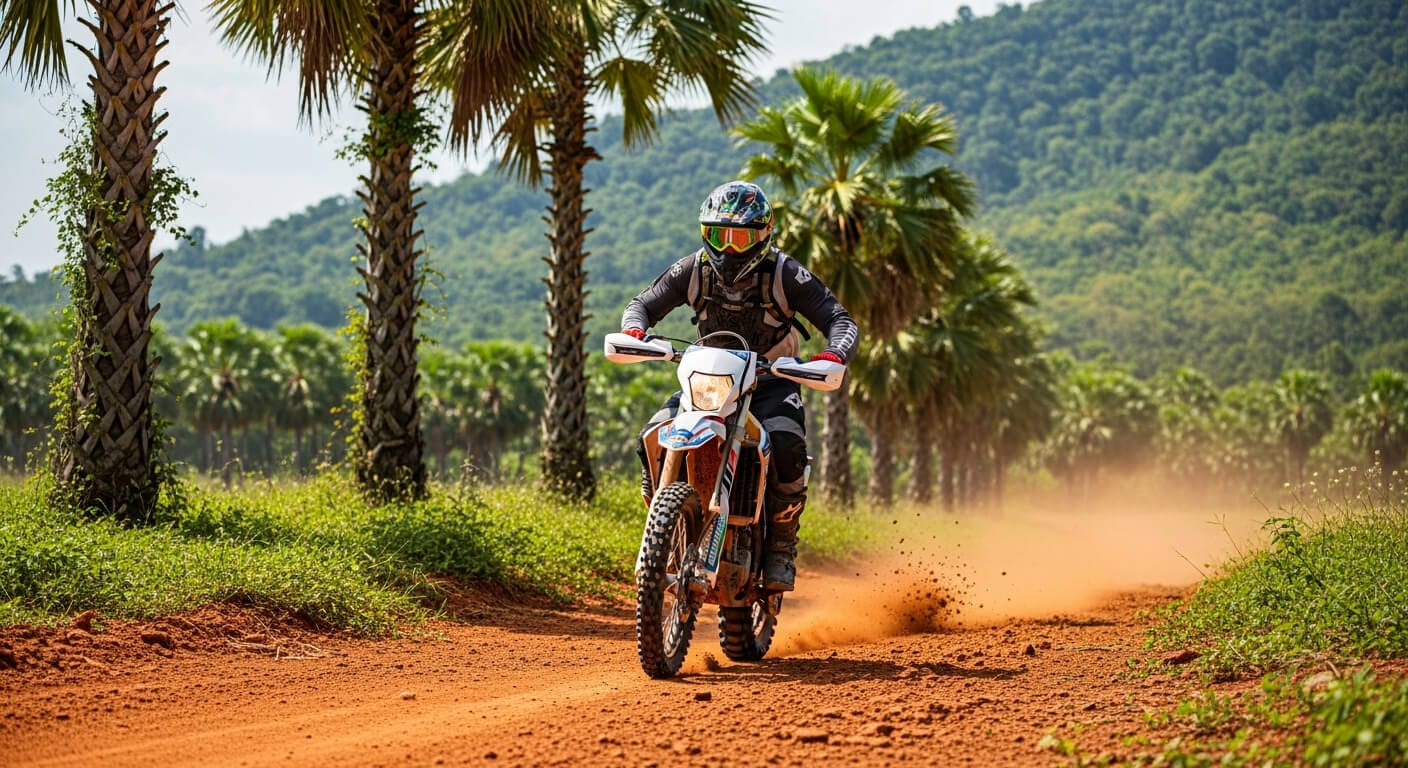
Dirt tracks are the foundation of many tours. These may pass through farmland, forest edges, plantations, village routes or mountain valleys.
In the dry season, dirt tracks can be dusty and fast-flowing. In the rainy season, the same tracks can become muddy roads with deep ruts and slippery clay. This is why season matters so much.
Dirt tracks are usually manageable for intermediate riders, but they still require focus. Loose gravel, animals, farm vehicles and blind corners can appear at any time.
Single Trails
Single trails are narrower and more technical. They may cut through jungle, forest, ridges or remote hillside areas.
These trails are often the most exciting part of the ride, but they are not for everyone. They can include roots, rocks, tight turns, steep drops, off-camber sections and sudden changes in traction.
For advanced riders, single trails are the heart of the adventure. For beginners, too much single trail can be exhausting and risky. A good operator should match the route to the rider, not force every guest into the same trail.
Steep Passes and Mountain Climbs
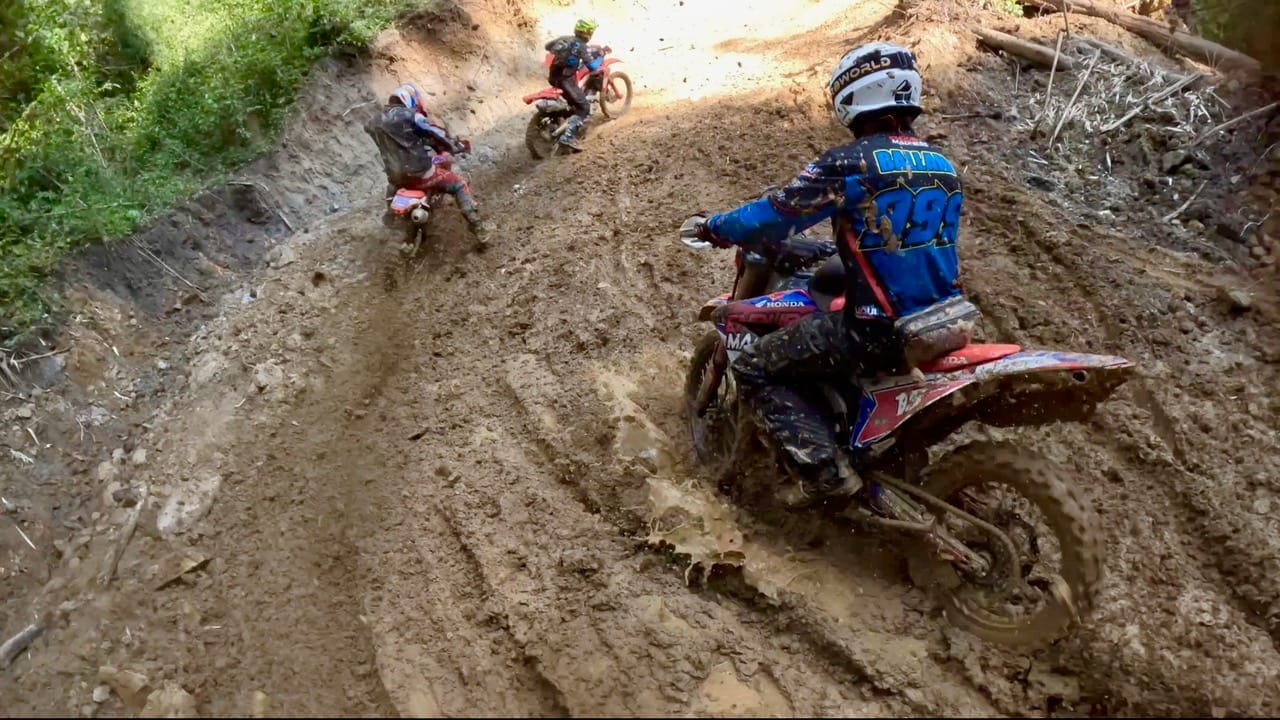
Northern Thailand is full of steep passes and mountain roads. Some are paved and beautifully curved; others are dirt climbs with loose surfaces, washouts or mud.
Climbing requires throttle control. Descending requires confidence, braking technique and body position. Riders who are used only to flat roads may underestimate how tiring mountain riding can be.
Muddy Roads
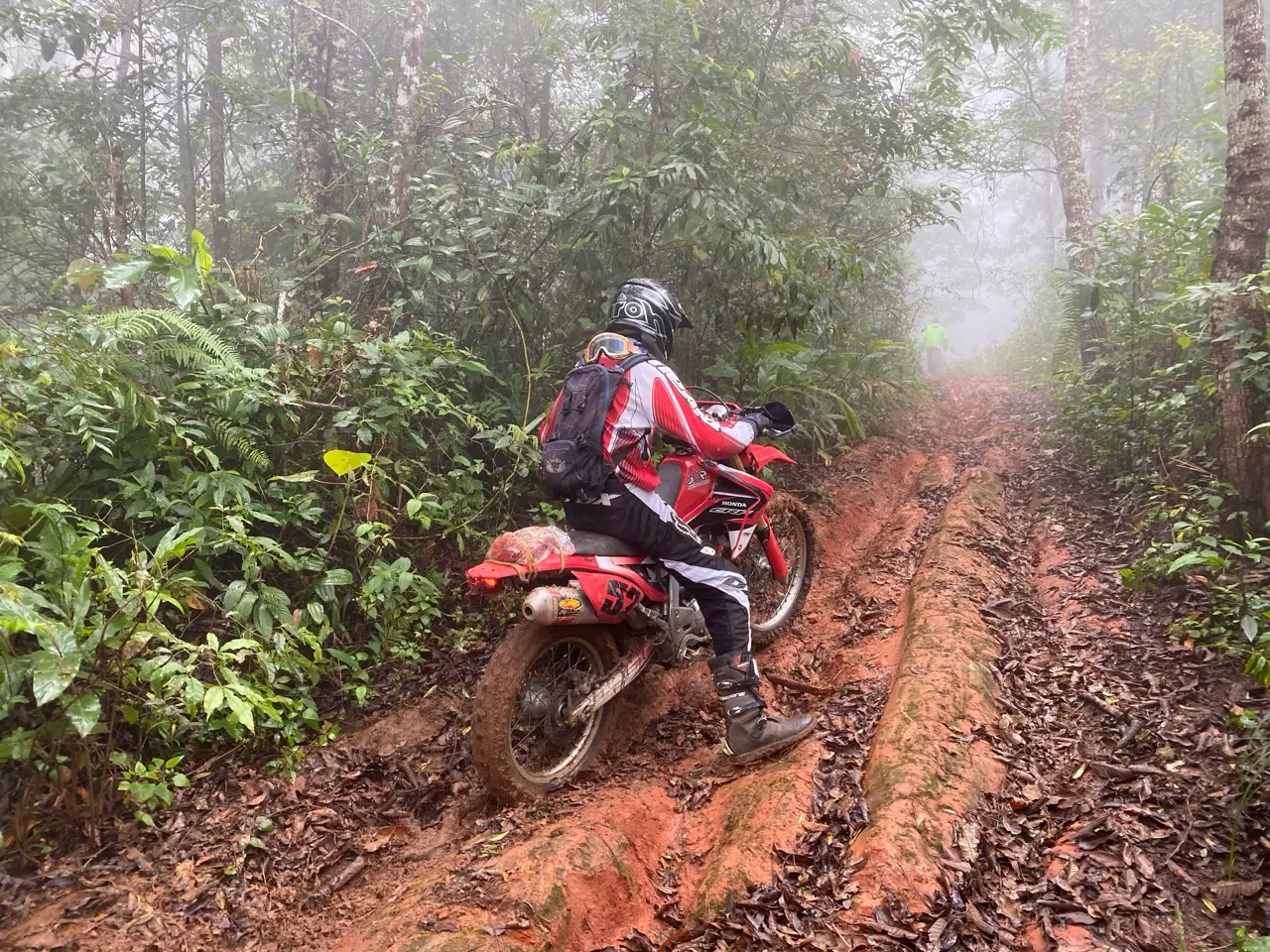
MUDDY ROADS are part of the Thailand dirt bike experience, especially during or shortly after the rainy season.
Mud can be fun. It can also be brutal.
Red clay can stick to tires, reduce grip and make even a simple climb feel like a battle. Deep ruts can catch the front wheel. Wet grass can be surprisingly slippery. River crossings may rise quickly after heavy rain.
This is why riders should never judge a Thailand off-road route only by distance. A 120 km day in dry conditions may feel easy. The same 120 km after heavy rain can become an EPIC RIDE that tests every muscle.
Twisted or Winding Roads
Even when you are not off-road, Thailand’s northern mountain roads are a major part of the experience.
The famous Mae Hong Son region is known for its winding mountain route and countless curves. These roads are beautiful, but they demand attention. Blind corners, local traffic, sand, gravel and changing weather can quickly turn a scenic curve into a hazard.
For many riders, the best tour combines both worlds: flowing mountain tarmac and true dirt trails.
Thailand can be ridden year-round, but the experience changes dramatically with the seasons.
Cool Season: November to February
For most international riders, this is the best time.
The cool season usually brings more comfortable temperatures, lower humidity and drier riding conditions. Several motorcycle touring sources describe November to February as the most popular or ideal period for Thailand motorcycle tours, especially in the north, with cooler air and better mountain visibility.
Why Riders Love This Season
• Dry dirt tracks
• Clearer mountain views
• Comfortable riding temperatures
• Better traction
• Lower humidity
• Great conditions for multi-day tours
• Beautiful mornings in the northern mountains
The downside is that this is also peak travel season. Good bikes, experienced guides and quality hotels can book out early. For groups, early planning is strongly recommended.
Hot Season: March to May
The hot season can be challenging. Temperatures rise, trails become dusty, and long riding days can feel physically demanding.
In some years, parts of Northern Thailand may also experience smoke or haze from agricultural burning. Visibility can be reduced, and the air quality may not be ideal for sensitive travelers.
This season is still possible for experienced riders, but tour design should be realistic: earlier starts, shorter technical sections, more water breaks and careful pacing.
Green / Rainy Season: June to October
The rainy season transforms Thailand into a lush, dramatic, deeply green landscape. For some riders, this is the most beautiful time of year.
But it is also the most unpredictable.
Trails can become muddy, river crossings can rise, forest tracks can be slippery, and landslides or washouts may affect remote routes. Some riders love this. Others may find it too demanding.
Who Should Ride in the Rainy Season?
Rainy-season dirt bike tours are best for:
• Experienced off-road riders
• Riders comfortable with mud
• Flexible travelers
• Small groups
• Those who value adventure over comfort
• Riders who do not mind route adjustments
If you dream of clean boots and predictable roads, choose the cool season. If you want wild tracks, jungle colors and a more raw adventure, rainy season can be unforgettable — but only with the right mindset.
What Skill Level Do You Need?
This is one of the most important questions.
A Thailand dirt bike tour is not one single product. It can be designed for beginners, intermediate riders or advanced enduro riders. The right match matters more than the most famous route.
Beginners should not be placed directly onto steep jungle single tracks or long muddy climbs. The goal is confidence, not survival.
Intermediate Riders
Intermediate riders usually get the best balance. They can enjoy dirt tracks, some single trails, climbs, descents, winding roads and cultural stops without being overwhelmed.
Most multi-day Thailand dirt bike tours are designed around intermediate riders, with optional harder sections for stronger guests.
Advanced Riders
Advanced riders can handle technical terrain, steep climbs, mud, rocks, river crossings and demanding jungle trails. They often want more challenging routes and less time on easy roads.
For these riders, Chiang Mai, Pai, Chiang Dao, Wiang Haeng and remote northern trails can deliver serious excitement. But even advanced riders should respect local conditions. Thailand’s jungle terrain can change quickly after rain.
Be Honest About Your Experience
One of the biggest safety mistakes is overestimating your ability.
A rider may be confident on big paved roads but inexperienced on loose dirt. Another rider may ride motocross at home but struggle with long tropical heat and multi-day fatigue. Skill is not only about speed. It is about control, judgment, patience and endurance.
Before booking, tell the operator honestly:
• Your age and fitness level
• Your motorcycle experience
• Your off-road experience
• Your preferred riding pace
• Any injuries or concerns
• Whether you prefer more off-road or more scenic backroads
A good tour company will appreciate honesty. It helps them design a safer and more enjoyable ride.
What Bikes Are Commonly Used?
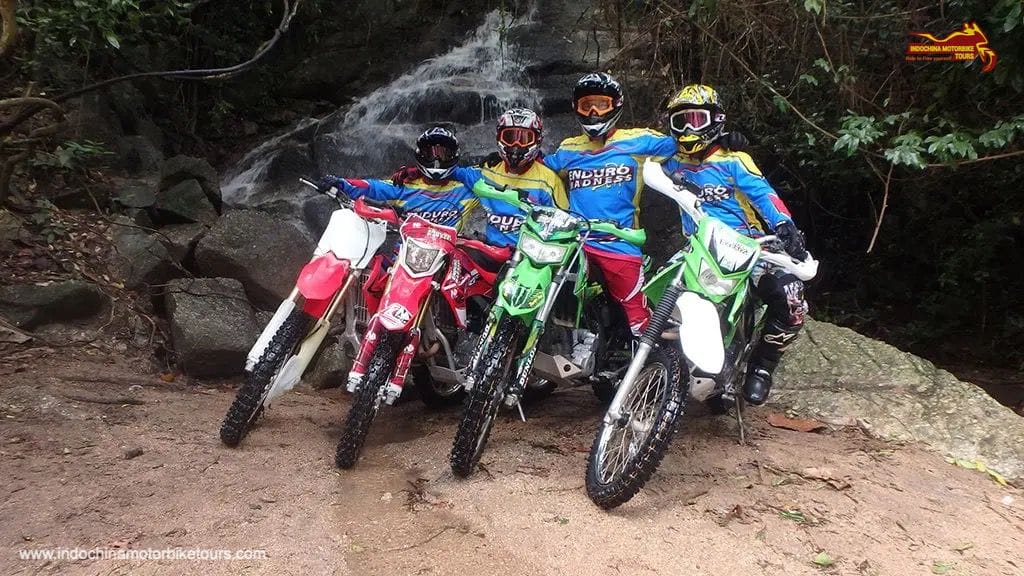
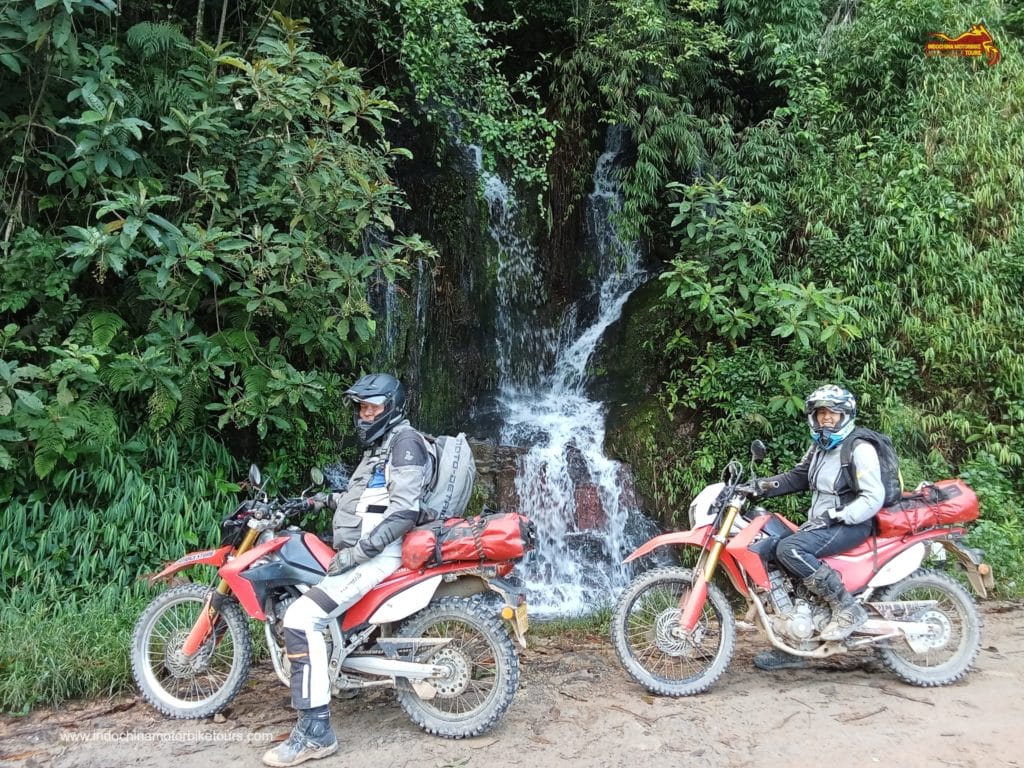
Thailand dirt bike tours commonly use lightweight dual-sport or enduro-style motorcycles suitable for mixed terrain. Depending on the operator and route, bikes may include models such as Honda CRF 250, Honda CRF 300, KLX-style bikes or other similar off-road motorcycles.
For dirt bike touring, the best bike is not always the biggest bike. In jungle trails and muddy roads, lighter is often better.
Why Lightweight Bikes Work Better Off-Road
A lightweight dirt bike is easier to control when the trail gets rough. It is less tiring in mud, easier to lift after a fall, and more manageable on narrow single trails.
Big adventure bikes can be wonderful on paved mountain roads, but they can become difficult in deep mud, rocky climbs or tight jungle trails. That is why many serious offroad motorcycle tours in Thailand use smaller, more agile machines.
Choosing Between Dirt Bike and Big Bike
Choose a dirt bike if you want:
• Jungle trails
• Dirt tracks
• Single trails
• Muddy roads
• Steep climbs
• River crossings
• Technical riding
Choose a big bike or adventure touring motorcycle if you want:
• Long paved distances
• Scenic mountain highways
• Comfortable cruising
• Mae Hong Son-style winding roads
• Less technical off-road
Both styles are exciting, but they are different experiences.
Safety, License and Legal Considerations
Thailand is an amazing riding destination, but riders must take safety and documentation seriously.
International Driving Permit
Foreign visitors who want to drive or ride in Thailand are generally required to hold an international driving license or International Driving Permit and show it together with their passport and national driving license when asked. Official Thai embassy guidance states that visitors driving either a vehicle or motorcycle in Thailand are required by law to hold an international driving license.
For motorcycle riding, the permit should match your actual motorcycle qualification. In practical terms, if your home license does not allow you to ride a motorcycle, an IDP should not be treated as a magic permission slip. Industry guidance also emphasizes that the IDP should include the motorcycle category when you intend to ride a motorcycle in Thailand.
Before joining a tour, riders should check:
• Their home motorcycle license
• Their International Driving Permit
• Passport validity
• Travel insurance terms
• Whether off-road riding is covered
• Medical coverage and evacuation support
Helmet and Protective Gear
Never treat gear as optional. A proper Thailand dirt bike tour should involve helmet, gloves, knee protection, elbow protection, riding boots or sturdy footwear, and suitable riding clothing.
In hot climates, some riders are tempted to wear light clothing. That is a mistake. Heat is uncomfortable, but injury is worse.
Guide Support
A professional guide is one of the most important safety assets on a Thailand dirt bike tour.
A good guide knows:
• Which trails are legal and accessible
• Which routes are too muddy after rain
• Where fuel is available
• Where food stops are reliable
• Which villages require slower riding
• Where mobile signal may disappear
• How to adjust the route for rider ability
• What to do in case of a breakdown or accident
This is especially important in remote northern regions where online maps may be incomplete or misleading.
Insurance
Travel insurance should be checked carefully before booking. Some policies exclude motorcycle riding, off-road riding, racing, high-risk sports or riding bikes above a certain engine size.
Do not assume you are covered. Read the policy. Ask the insurer directly. Keep written confirmation if possible.
What Is Usually Included in a Thailand Dirt Bike Tour?
Every company is different, but a well-organized guided dirt bike tour in Thailand commonly includes the key services riders need to focus on the adventure rather than logistics.
Typical Inclusions
Motorcycle Rental
The tour normally includes a suitable dirt bike or off-road motorcycle for the selected route. Bikes should be properly maintained, checked before departure and suitable for the terrain.
English-Speaking Riding Guide
An experienced guide leads the route, manages the pace, checks rider ability and handles trail navigation.
Fuel
Fuel is often included during the tour riding days, especially on organized guided packages.
Riding Gear
Many tours include or offer protective gear such as helmet, gloves, knee pads, elbow pads and sometimes riding jerseys or boots depending on availability and sizing.
Accommodation
Multi-day tours usually include hotels, guesthouses or local lodges based on twin-share rooms. In remote areas, accommodation may be simple but atmospheric.
Meals
Breakfast is commonly included with accommodation. Lunch and dinner may be included depending on the tour package. Some operators include all meals; others leave some dinners open for flexibility.
Support and Basic Mechanical Assistance
Guides usually carry basic tools and can handle minor issues. For larger groups or longer tours, additional support may be arranged.
Entrance Fees or Local Fees
Some routes may include national park fees, local permits or sightseeing fees, depending on the itinerary.
Drinking Water
Water is usually provided during riding days, but riders should also carry their own hydration system if possible.
What May Not Be Included?
Travelers should check the quotation carefully. Common exclusions may include:
• International flights
• Domestic flights
• Visa fees
• Personal travel insurance
• Alcoholic drinks
• Tips for guide and support team
• Personal expenses
• Bike damage deposit or repair costs after crashes
• Riding boots or special gear not available in the correct size
• Single room supplement
• Services not mentioned in the itinerary
Clear inclusions and exclusions are important because dirt bike tours involve more operational risk than normal sightseeing tours.
How to Choose the Right Thailand Dirt Bike Tour
Choosing the right tour is not only about the route name. It is about matching the ride to your time, skill, travel style and risk tolerance.
Choose by Duration
1-Day Dirt Bike Tour
Best for riders with limited time or first-timers who want a taste of off-road Thailand.
Good for:
• Short Chiang Mai stays
• Business travelers
• Travelers testing their comfort level
• Riders not ready for a full expedition
2–3 Day Dirt Bike Tour
This is a great format for riders who want a real adventure but cannot commit to a long journey.
Good for:
• Chiang Mai to Pai style routes
• Pattaya short escapes
• Mixed dirt and scenic backroads
• Small groups of friends
4–5 Day Dirt Bike Tour
This is where the ride starts to feel like a journey. You can reach deeper regions, stay in mountain towns and experience more varied terrain.
Good for:
• Intermediate riders
• Northern Thailand loops
• Chiang Mai, Pai, Chiang Dao, Mae Hong Son combinations
6–8 Day Dirt Bike Tour
This is the full adventure format. More remote trails, more cultural depth, more changes in terrain and a stronger expedition feeling.
Good for:
• Experienced riders
• International groups
• Adventure travelers
• Riders wanting a proper EPIC RIDE
Choose by Terrain
Before booking, ask what percentage of the route is:
• Paved road
• Dirt road
• Single trail
• Technical off-road
• Muddy road
• River crossing
• Mountain pass
A tour advertised as “off-road” may still vary greatly in difficulty. Some are mostly scenic dirt roads. Others are serious enduro rides.
Choose by Group Style
Private tours are usually better for riders who want flexibility, especially if the group has different skill levels.
Group tours can be more social and cost-effective, but they require riders to fit the pace and ability level of the group.
Cultural Etiquette on the Trails
Adventure riding is not separate from local life. In Thailand, many dirt tracks pass through villages, farms, temple areas and community lands. Riders should behave as guests.
Slow Down in Villages
Children, dogs, chickens, scooters, tractors and elderly villagers may appear suddenly. Dust can also be unpleasant for local residents.
Slow riding shows respect.
Respect Temples and Sacred Places
Thailand is deeply Buddhist, and temples are active community spaces. Dress respectfully when visiting, remove shoes where required, and avoid loud behavior.
Support Local Communities
Eat local food, buy drinks from village shops, stay in locally run guesthouses when possible, and follow guide advice about where to stop.
Do Not Ride Like a Racer Through Local Life
A dirt bike tour is not a race. The best riders are not the loudest or fastest. They are the ones who know when to push and when to show respect.
What to Pack for a Thailand Dirt Bike Tour
Packing well can make the difference between a smooth ride and an uncomfortable one.
Essential Riding Items
• Lightweight riding jersey or breathable long-sleeve shirt
• Riding pants or durable long pants
• Gloves
• Helmet liner or buff
• Hydration backpack
• Sunglasses or goggles
• Sunscreen
• Small waterproof bag
• Lightweight rain jacket
• Personal medication
• Copies of passport, license and insurance
• Phone with offline maps
• Power bank
For Multi-Day Tours
• Quick-dry clothing
• Casual evening clothes
• Swimwear if the route includes waterfalls or hotels with pools
• Light jacket for mountain nights
• Personal toiletries
• Small first-aid items
• Insect repellent
• Earplugs
• Spare socks
• Waterproof document pouch
In the cool season, mountain mornings and evenings can be surprisingly cold, especially in the north. Some touring sources note that northern mountain temperatures can drop significantly at night during the cool season, so layers are useful.
Real Rider Experience: What a Day on Tour Feels Like
A typical day may begin with the smell of coffee and chain lube.
The bikes are lined up outside the hotel. The guide checks tire pressure, fuel, brakes and the day’s route. Riders adjust helmets, tighten gloves, drink water and joke nervously about yesterday’s muddy climb.
The morning starts gently — a ride through town, then small backroads, then the first dirt section. The group spreads out. Dust hangs in the air. Someone stalls on a climb, laughs, restarts and tries again.
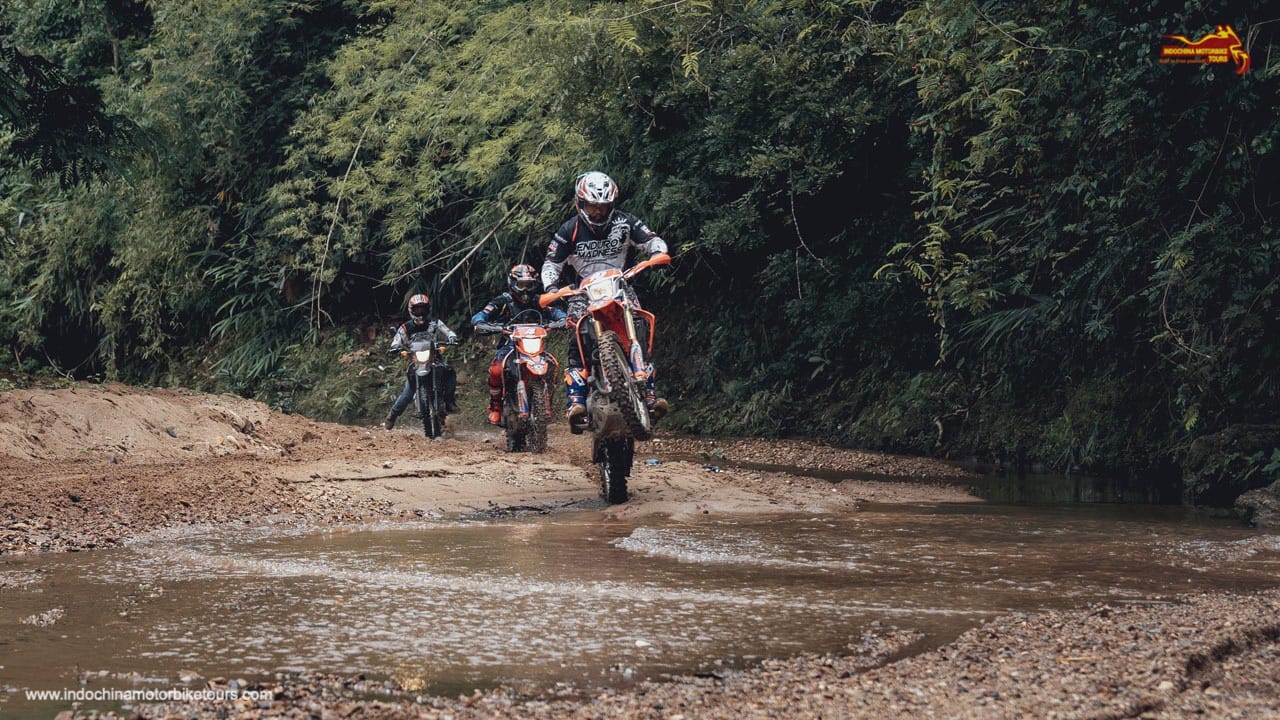
By mid-morning, the ride becomes more serious. The trail narrows into jungle. Bamboo leans overhead. The ground changes from dry dirt to broken stones. A river crossing appears. The guide goes first, showing the line. One by one, the riders follow.
Lunch is not fancy, but it tastes perfect: noodles, fried rice, grilled chicken, chili, herbs, maybe a cold Coke from a tiny village shop. Boots come off. Stories begin. Someone talks about the climb. Someone else talks about the view. Everyone drinks more water.
In the afternoon, the route climbs into the hills. Sharp curves, steep passes, winding roads, then another dirt track. The sun drops lower. The mountains turn blue. The last section feels easier because the group has found its rhythm.
By evening, you reach the night stop tired but alive in the best possible way. The body is dusty, the shoulders ache, the hands are heavy, but the mind is bright. That is the feeling riders chase.
Not comfort. Not luxury. Not speed alone.
A sense of having crossed through a real landscape under your own control.
It is perfect for riders who enjoy movement, challenge, landscapes, local encounters and the satisfaction of reaching places that ordinary tours cannot reach.
Best For
• Adventure riders
• Enduro riders
• Dirt bike enthusiasts
• Big-bike riders wanting off-road experience
• Groups of friends
• Solo riders joining guided tours
• Experienced travelers seeking remote regions
• Riders who love mountains, jungle and culture
Not Ideal For
• Travelers who dislike physical challenge
• Riders with no balance or motorcycle confidence
• People expecting luxury every night
• Guests unwilling to follow safety instructions
• Riders who want to race rather than travel
• Anyone without suitable insurance or proper documents
You may forget the exact distance. You may forget the name of a village. You may forget how many sharp curves you rode in one day.
But you will remember the feeling.
The first time the trail dropped into jungle.
The sound of rain on banana leaves.
The guide pointing across a valley toward the next pass.
The smell of woodsmoke in a mountain village.
The laughter after someone got stuck in mud.
The quiet pride of finishing a difficult climb.
The golden light over the hills near Pai or Mae Hong Son.
The sense that, for a few days, you were not just visiting Thailand — you were riding through its hidden backroads, its wild tracks, its living culture and its mountain soul.
Veteran off-road trail architect specializing in remote single-track expeditions across Northern Vietnam, Laos, and the Himalayas. Scouted over 30,000 km of uncharted trails.
Northern Laos, with its rugged mountains, pristine rivers, and vibrant cultural heritage, beckons travelers year-round with its captivating beauty and enchanting allure....
Converting a foreign driving license into a Vietnamese driving license typically involves a process of verification and meeting certain requirements. The specific...
INDOCHINA MOTORBIKE ADVANTAGE
Why Riders Choose Our Dirt Bike Expeditions
Top-Tier Dirt Bikes
Fully prepared Honda CRF250L, CRF300L, Rally, XR190, CF Motor
450, and Himalayan 450 fleets maintained daily by factory-trained mechanics.
Veteran Trail Leaders
100% English-speaking local trail masters knowing every
off-road single track, forest trail, and mountain pass.
Support Van & Spares
Dedicated backup vehicle carrying rider luggage, spare parts
inventory, and comprehensive first-aid gear.
Guaranteed Departures
Flexible private departures tailored to your group or join
open group tours with global riders.
100% TAILOR-MADE EXPEDITIONS
Looking for a Custom Dirt Bike Itinerary?
Tell us your preferred riding style, group size, and duration. Our expert trail architects will craft a private expedition designed specifically for you.