Estimated distance: 280–310 kilometres
Estimated riding time: 6–7 hours, excluding visits
Road character: Mostly paved highway with rural detours and moderate traffic
Riding level: Moderate
Main highlights: Battambang heritage quarter, Bamboo Train or countryside ride, northwest rice plains and return to Siem Reap
Tour ends: Siem Reap
Our final morning begins on National Road 5, riding north from Pursat towards Battambang. The stage is comparatively straightforward, allowing the group to enjoy the rhythm of the open road while remaining alert to trucks, local buses and motorcycles entering from village lanes.
Battambang appears slowly through a landscape of canals, rice fields and traditional houses. Cambodia’s second great historic city is appreciated for its old shop houses, relaxed riverfront and surrounding agricultural countryside. The province also contains ancient temples including Wat Ek, Prasat Banan and Baset Temple.
After a coffee near the Sangker River, we explore part of the old quarter on foot. Faded façades, balconies and family-run businesses reveal the many layers of Battambang’s history. The city is less monumental than Siem Reap, but that is part of its appeal—it feels inhabited rather than staged.
Depending on the group’s pace and arrival time, riders may choose one short countryside experience. The most accessible option is the Bamboo Train, where a simple rail platform travels through fields outside the city. Alternatively, the group can take a scenic motorcycle loop through farming villages, stopping to observe rice-paper making, fruit cultivation or local food production. The official tourism authority lists the Bamboo Train among Battambang’s characteristic countryside experiences.
Following lunch, we begin the final ride towards Siem Reap. The journey passes through Sisophon before joining National Road 6. These final hours often feel reflective. Over seven days, the landscape has changed from ancient temple country to remote highlands, from the Mekong River to Tonle Sap’s western plains.
We approach Siem Reap in the late afternoon, regroup outside the city and ride together to the motorcycle base. After refuelling, the bikes are inspected and returned. The journey concludes with a final briefing and a well-earned celebration.
The loop ends where it began, but the Cambodia now carried in memory is far larger than Angkor: a kingdom of rivers, red roads, quiet villages, difficult histories and extraordinary human warmth.
Recommended Tour Highlights
- Ride approximately 2,000 kilometres across northern, eastern and western Cambodia.
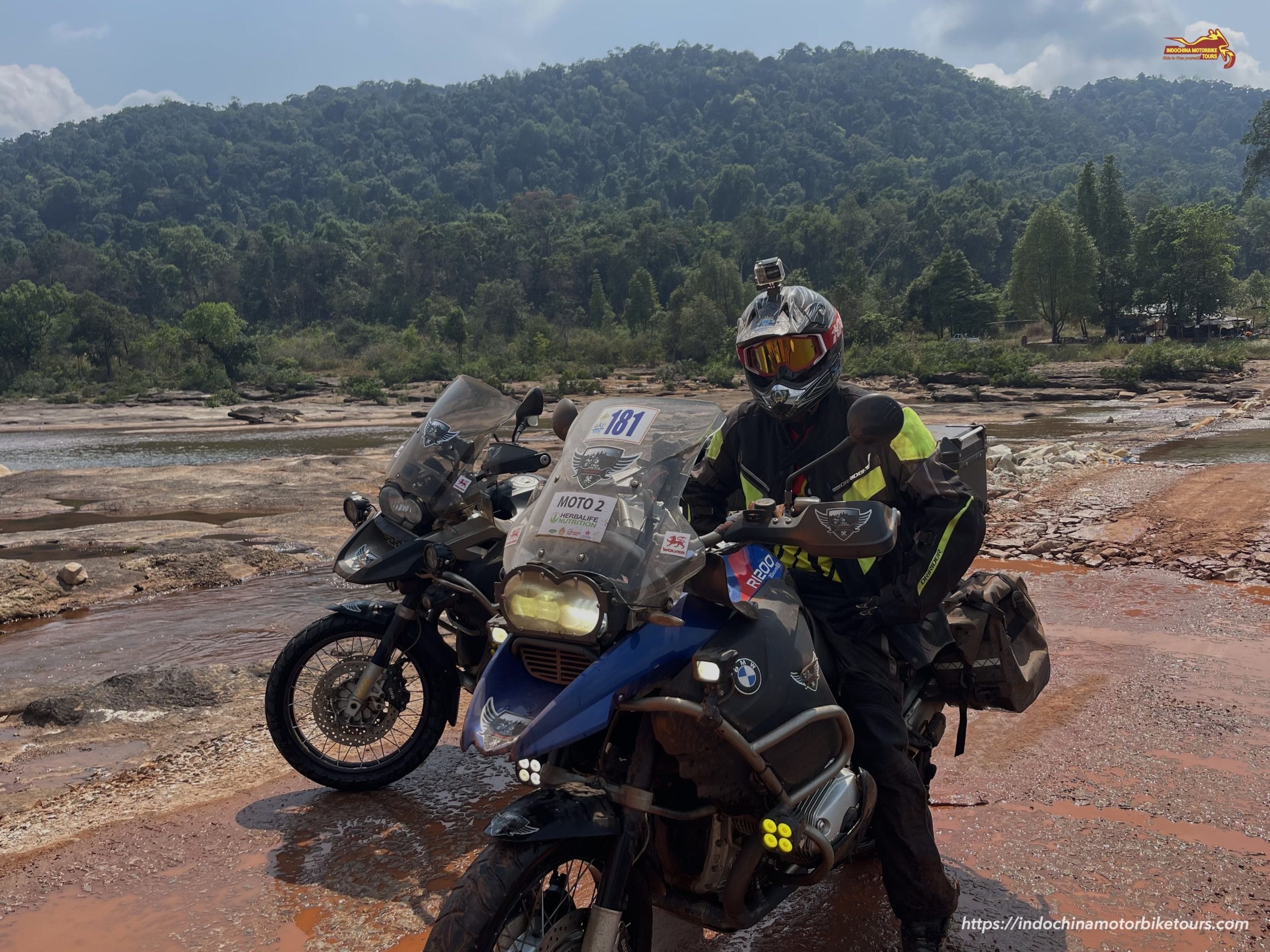
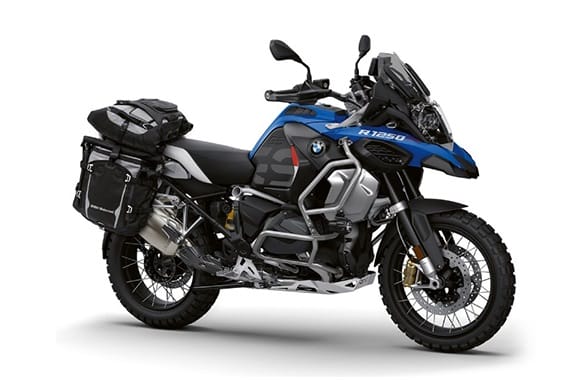
- Experience BMW GS 1250cc adventure touring on highways, provincial roads and red-earth detours.
- Explore Banteay Chhmar and, when officially reopened, Preah Vihear Temple.
- Cross the remote highland route between Ratanakiri and Mondulkiri.
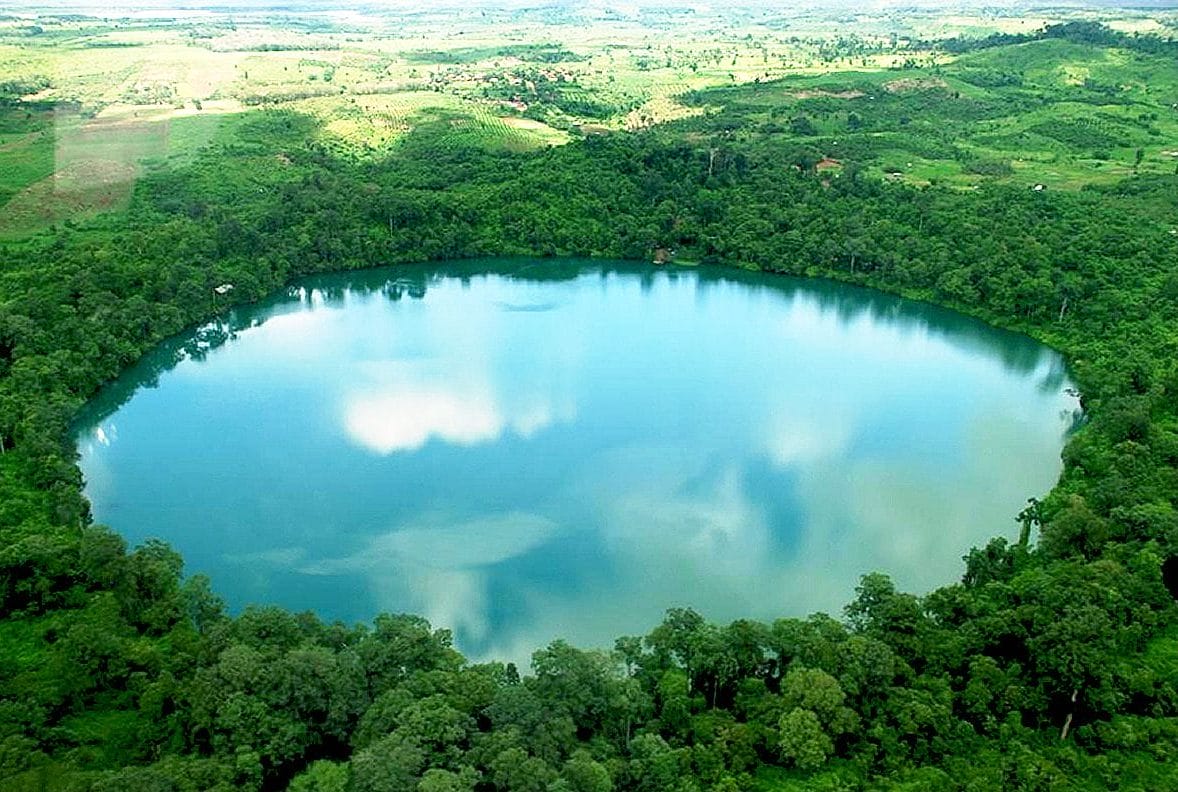
- Swim or relax beside Yeak Laom volcanic lake.
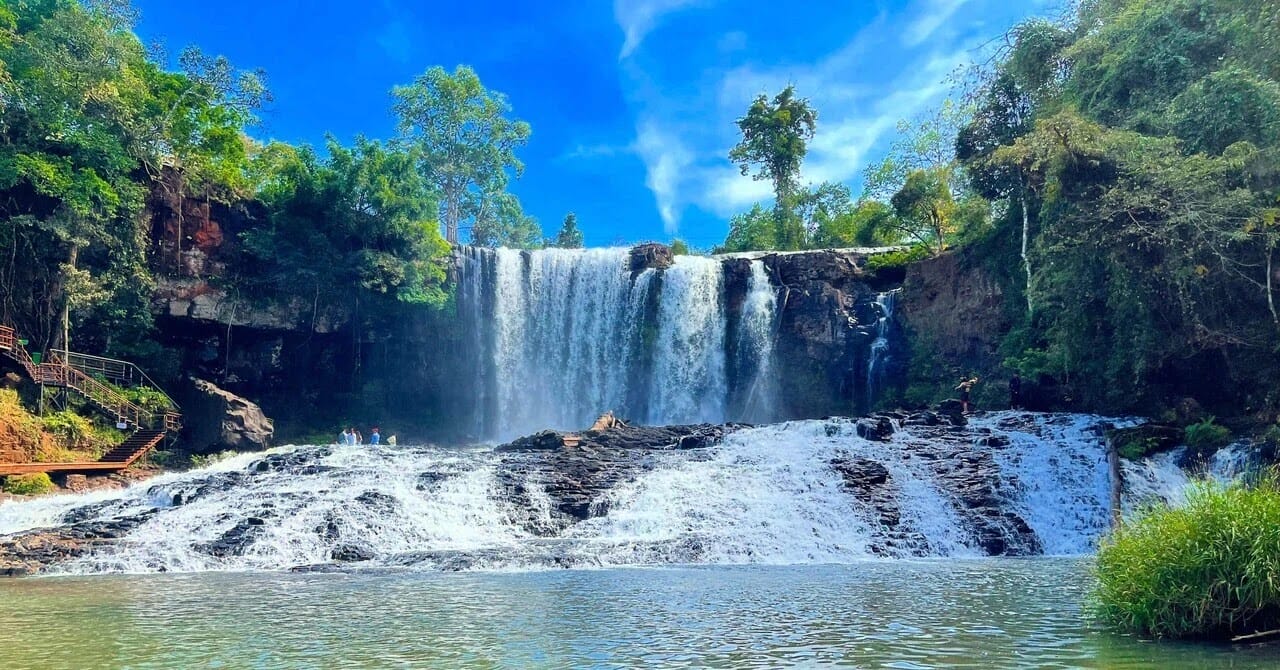
- Visit Kachanh and Bousra waterfalls.
- Observe Irrawaddy dolphins responsibly in the Mekong near Kratié.
- Discover indigenous highland culture with sensitivity and local guidance.
- Experience Kampong Cham, Kampong Chhnang, Pursat and Battambang beyond Cambodia’s standard tourist circuit.
- Ride a complete ADV motorcycle loop beginning and ending in Siem Reap.
Frequently Asked Questions
-
What riding experience is required?
Participants should be confident riding motorcycles above 1,000cc and able to manage a heavy ADV bike at low speed. Experience with gravel, broken asphalt, steep access roads, loose surfaces and long riding days is strongly recommended. This is not an appropriate tour for beginners.
-
Which motorcycles are suitable?
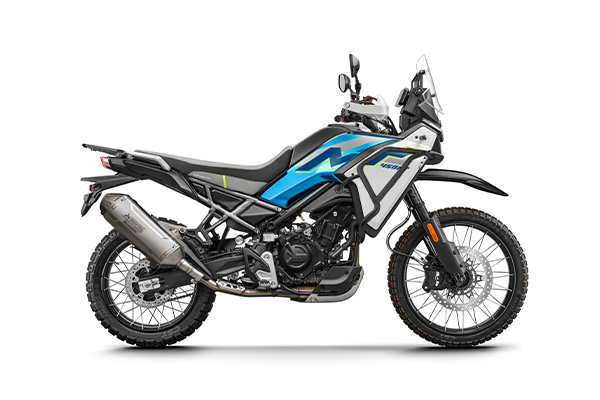
The preferred motorcycle is a BMW R 1250 GS or BMW R 1200 GS, with equivalent models considered subject to availability. Riders should be familiar with the motorcycle’s weight, electronic riding modes, braking system and luggage arrangement before departure.
-
Is the route mainly off-road?
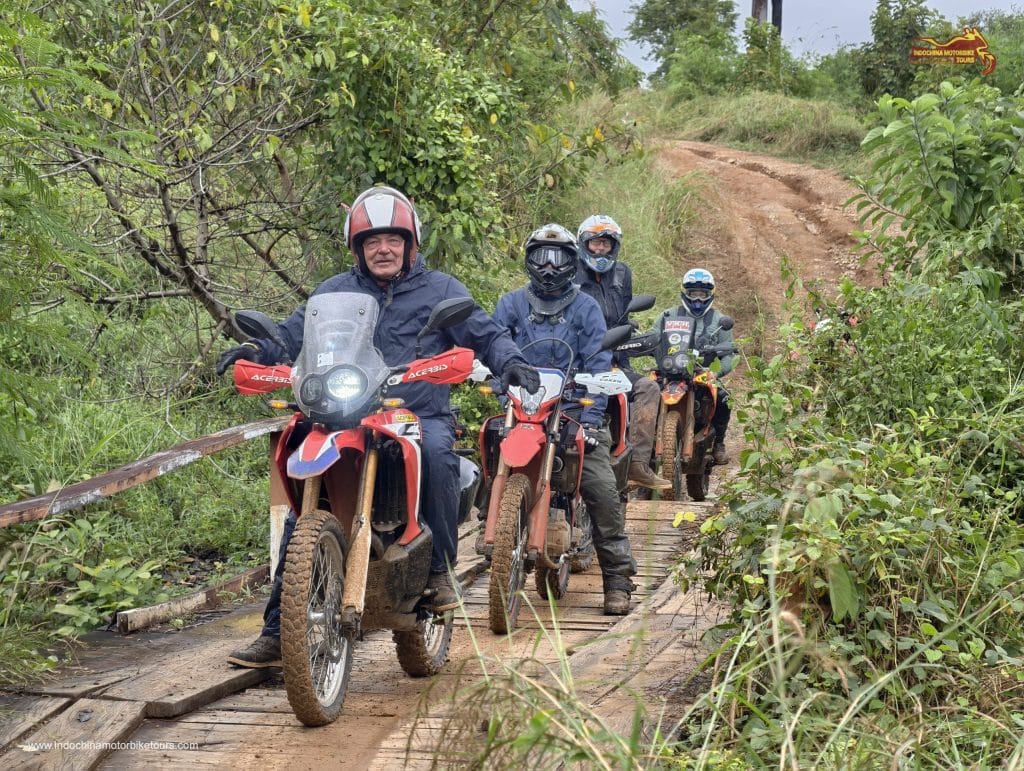
No. It is an adventure-touring route rather than a hard-enduro expedition. Most of the journey uses sealed roads, but riders may encounter red laterite, gravel, potholes, damaged shoulders, roadworks, sand and wet-season mud.
-
Is Preah Vihear Temple currently accessible?
As of 4 August 2026, the UK FCDO reports that Preah Vihear Temple is closed, and official travel advice discourages travel close to the Cambodian–Thai border. The original route must not operate until access, security and insurance coverage have been formally reconfirmed.
-
What motorcycle licence is required?
Cambodia’s licensing arrangements for foreign riders require careful verification, especially for motorcycles above 125cc. Cambodia’s Ministry of Public Works and Transport provides a Type A motorcycle licence category for foreigners, while the Australian Embassy notes that international driving permits have not always been accepted. Guests should therefore submit their home motorcycle licence before booking so the operator can confirm current requirements with Cambodian authorities and insurers.
-
Is travel insurance compulsory?
Yes. Insurance must specifically cover large-capacity motorcycle riding, medical evacuation and the full itinerary. Standard travel insurance often excludes motorcycles above a certain engine capacity or may become invalid when travelling against government advice.
-
Is a support vehicle recommended?
Yes. A support vehicle is strongly recommended for groups using BMW GS motorcycles. It can carry luggage, drinking water, spare tyres, tools, medical supplies and a disabled motorcycle if recovery is required.
-
What is the best time of year?
Cambodia’s dry season generally runs from November to April, with December and January usually offering cooler conditions. For big-bike touring, November to February is normally the most comfortable period, subject to security, road and accommodation availability.
-
Can the tour operate during the rainy season?
It may be possible, but daily distances and off-pavement sections must be reconsidered. Cambodia’s rainy season generally runs from May to October, and heavy rain can create flooding, slippery laterite and sudden changes around waterfalls and rural roads.
-
Can a pillion passenger join?
A highly experienced rider may carry a pillion, but the long distances, heat and occasional rough sections can be tiring. A support vehicle should be available so the passenger can transfer to the vehicle whenever necessary.
-
What accommodation standard is expected?
Accommodation is normally comfortable provincial hotel or resort standard with private bathroom, air-conditioning where available and secure motorcycle parking. Standards in remote towns may be simpler than in Siem Reap or Phnom Penh.
-
Are vegetarian and special meals available?
Vegetarian meals can generally be arranged with advance notice. Vegan, gluten-free or allergy-sensitive requirements require more careful preparation in remote provinces, where ingredient choices may be limited.
-
Is fuel easily available?
Fuel is available in provincial towns and along major highways, but remote sections require planned refuelling. The guide should identify reliable stations daily, and emergency fuel may be carried by the support vehicle where legally and safely permitted.
-
What riding equipment should guests bring?
A full-face or adventure helmet, armoured jacket and trousers, riding boots, gloves, rain layer, hydration system, sunglasses and sun protection are essential. Lightweight clothing and sandals should be packed for evenings and temple visits.
-
Are there landmine risks?
Yes, particularly near former conflict zones and border areas. Riders must never leave recognised roads, marked tracks or authorised temple paths. Metal objects should not be picked up, and all instructions from local authorities must be followed.
-
How physically demanding is the tour?
Riders should be able to spend six to eight hours on the motorcycle, cope with heat and maintain concentration over consecutive long-distance days. Good cardiovascular fitness, hydration discipline and adequate sleep are important.