Vietnam’s offroad trails ignite a feeling that stays with you long after the ride ends. Let 2026 be
Riding a motorbike in Vietnam isn’t just transportation — it’s a rite of passage, a full-body immersion into the rhythm of local life. From morning markets buzzing with scooters to the winding mountain passes of Ha Giang and the rice terraces of Mu Cang Chai shimmering under the sun, Vietnam invites travelers to explore its most intimate corners on two wheels. But for many foreigners, that excitement quickly turns into anxiety:
Is my license valid? What if the police stop me? Will my insurance cover me? How do I stay legal on the road?
This comprehensive 2025 guide helps you ride Vietnam with confidence. Whether you’re planning a short motorbike trip in the cities, a multi-day adventure through the mountains, or a fully-guided Vietnam motorbike tour, understanding the legal rules is essential. With clear explanations, real-world advice, and the latest updates for 2025, this guide empowers you to enjoy the journey without fear — and to ride Vietnam the way it deserves to be experienced.
Overview: Riding in Vietnam — Freedom, Adventure, and Legal Reality
The dream is universal: cruising down the coastline from Hue to Da Nang, feeling the clouds brush your face on the O Quy Ho Pass, or weaving through the ancient lanes of Hanoi’s Old Quarter. Vietnam’s landscapes, culture, and energy make it one of Asia’s greatest destinations for motorbike adventures.
But here’s the reality many travelers don’t initially see:
Vietnam has specific legal standards for motorbike riders, and not all foreign licenses or International Driving Permits (IDPs) are accepted. Many travelers unknowingly violate the rules, exposing themselves to fines, invalid insurance, or even legal issues in case of an accident. The good news? There are clear, legal pathways to ride motorbikes safely and confidently — whether you’re here for a holiday, long-term stay, or joining a guided motorcycle tour.
This guide walks you through everything essential:
- What the law says in 2025
- Which foreign licenses are accepted
- The 1968 Vienna Convention confusion
- When IDPs work — and when they don’t
- How to convert your license legally
- What insurance requires
- What to do when stopped by police
- Local riding culture & safety
- Practical tips learned from years of guiding international riders
Let’s begin by unpacking the legal foundations.
Understanding Vietnam’s Motorbike Licensing Laws in 2025
Riding a motorbike in Vietnam seems effortless — everyone does it, from grandparents carrying groceries to students in school uniforms. Yet beneath this everyday picture lies a structured legal system that determines who can ride what, and under what conditions. If you want a safe and smooth trip, you need to understand these fundamentals.
Why Vietnam Requires a Valid, Recognized License
Vietnam’s traffic law states clearly that anyone operating a motorbike above 50cc must possess a valid license recognized within Vietnam. For locals, this means the Vietnamese A1 or A2 license. For foreigners, the law acknowledges two possibilities:
- A Vietnamese driver’s license (obtained through testing or conversion)
- A1968-Convention International Driving Permit (IDP) paired with a valid home-country license
Anything outside of these two categories is not considered legally valid, and therefore not recognized by police or insurance companies.
The 1968 vs 1949 Convention — Why It Matters for Tourists
This is the part that confuses most travelers.
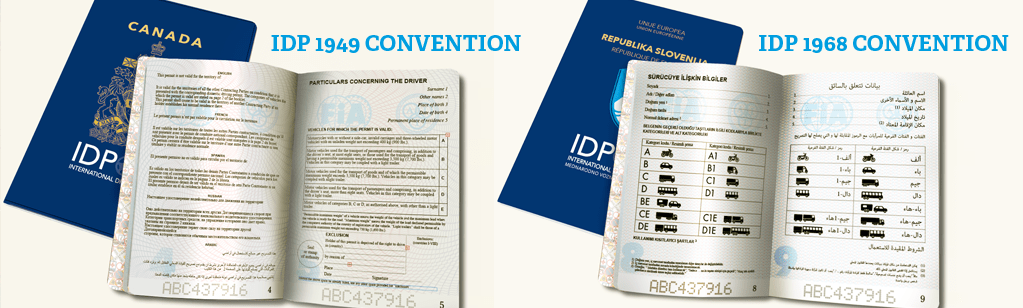
Many countries (including Australia, USA, Canada, New Zealand, Japan, Malaysia, Singapore) issue 1949 Geneva IDPs, which Vietnam does not officially recognize. That means even though you hold a legitimate IDP at home, Vietnamese law sees it as invalid.
Only IDPs issued under the 1968 Vienna Convention are valid in Vietnam. Several European countries, the UK, and a few others follow the 1968 Convention. If your country issues the 1968 version, your IDP + home license are legally acceptable.
The Problem with Renting Motorbikes Without a Valid License
The rental system in Vietnam is friendly — perhaps too friendly. Many shops will rent a 125cc or even a 155cc motorbike to anyone with a passport and cash. But renting a bike doesn’t mean you are riding legally.
Without a valid license:
- Travel insurance becomes void, even if the accident wasn’t your fault
- Police can issue fines
- You bear full legal responsibility in accidents
- You may be liable for property damage or third-party injury
For a short-term visitor, the risks can be financially overwhelming. This is why many responsible operators guide foreigners to ride legally — for their own safety and peace of mind.
Which Motorbike Licenses Foreigners Can Use Legally in Vietnam
To ride legally, foreigners must fall into one of three categories. Understanding these distinctions may save your entire trip.
Category 1 — Foreign License + 1968 IDP (Most Reliable Scenario)
If your country is part of the 1968 Vienna Convention and issues a compliant IDP, congratulations — this is the simplest and fastest route.
You must carry:
- Your original home-country license showing motorcycle entitlement
- Your IDP (must clearly mention motorcycle category A or equivalent)
- Your passport
If you have all three, you can legally operate motorbikes in Vietnam that match your license class.
Category 2 — Converting Your Foreign License to a Vietnamese License
For long-term travelers, expats, digital nomads, or anyone staying more than a few weeks, this is the best legal option.
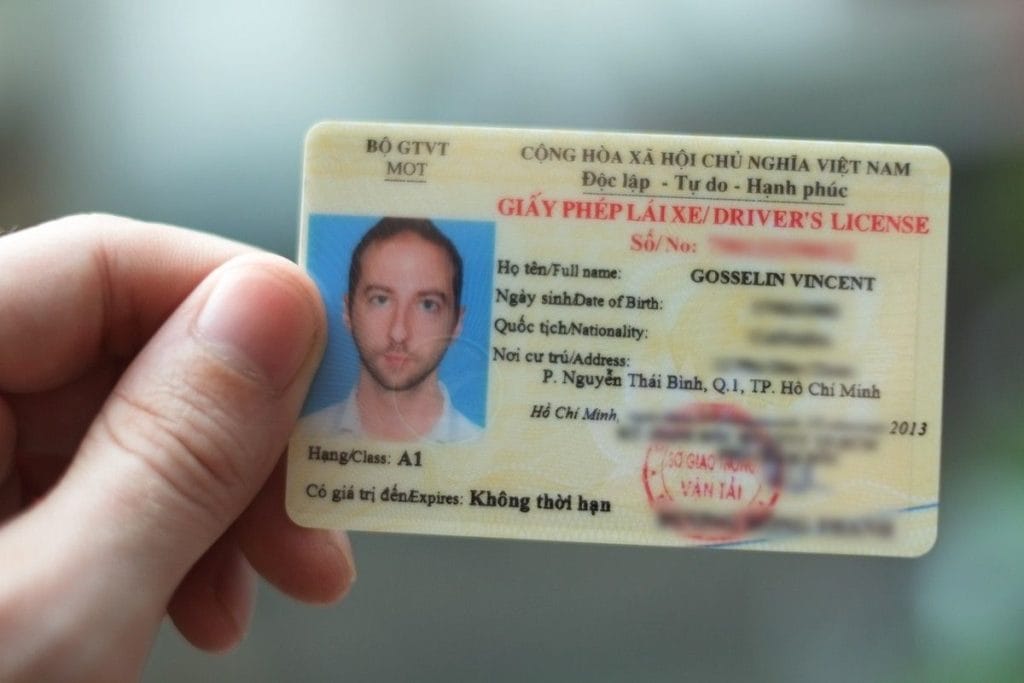
Vietnam allows foreigners to convert their home license to a Vietnamese A1 or A2 license without taking a driving test. This gives you the same legal rights as locals.
To qualify, you typically need:
- A valid visa or temporary residence
- A valid home-country license
- A notarized translation (if required)
- A health certificate
- Passport and photos
- Application forms submitted to the Department of Transport
Processing time is usually 5–7 working days. Once converted, the Vietnamese license fully covers you, including for travel insurance.
Category 3 — Motorcycle Training + Vietnamese Exam
Some travelers choose to take the motorcycle exam in Vietnam if they have no home-country license. This process is longer and includes theory + practice tests, but it is possible. However, most tourists prefer using conversion or IDPs instead.
Vietnam’s Motorbike Categories — A1 vs A2 Explained
Motorbike classifications in Vietnam determine what type of bike you can legally ride.
A1 License — For Most Travelers
The A1 license allows you to ride motorcycles up to 175cc. This covers:
- Honda XR150
- Honda Winner 150
- Yamaha Exciter 155
- Honda Future, Vision, Wave
- Most scooters and standard bikes
Most foreign travelers on guided tours use A1-compliant bikes.
A2 License — For Big-Bike Enthusiasts
The A2 license covers bikes above 175cc:
- Honda CB500X
- BMW GS 850/1250
- Triumph Tiger
- Royal Enfield Himalayan
- Harley Davidson models
A2 licenses are more difficult to obtain because you must show equivalent entitlements in your home license. Vietnam does not allow A2 upgrades if your home license doesn’t include large-motorcycle permission.
The Insurance Connection — Why Riding Unlicensed Can Cost You
One of the biggest misunderstandings among foreign riders is how insurance works. Insurance companies — including reputable international ones — almost always require that the rider holds:
- A valid motorcycle license
- A license recognized in the country where the accident occurs
- A bike that matches the license class
If you fail any of these points, coverage becomes questionable or completely void.
Where Can You Purchase Motorbike Travel Insurance for Vietnam?
Case Example — The Unlicensed Australian Rider
Imagine an Australian rider traveling through Vietnam on a rented 150cc motorbike. He holds an IDP from Australia (issued under the 1949 Convention). He gets into an accident due to another driver’s fault.
Despite having insurance, the company denies the claim because:
- The IDP is not valid in Vietnam
- Under Vietnamese law, he is unlicensed
- Injury/medical claims become invalid
Total cost can exceed $20,000 USD in serious cases.
Case Example — The Rider with a Converted Vietnamese License
In contrast, another foreign rider converts his license legally:
- He obtains a Vietnamese A1 license
- His insurance accepts the claim
- He remains legally protected
The difference in outcomes is dramatic — and entirely preventable.
How to Convert Your Local License into a Vietnamese one— Step-by-Step Guide for Foreigners
This is the solution most long-term travelers, expats, and responsible tour operators recommend. Conversion is surprisingly simple once you know the process.
Step 1 — Check Your Eligibility
You must have:
- A valid visa, temporary residence card, or long-term stay
- A home-country license with motorcycle entitlement
- At least 3–4 weeks in Vietnam if using certain agencies
Step 2 — Prepare the Required Documents
Typical documents include:
- Original license
- Passport + residence documents
- Health certificate (simple checkup)
- Two passport-sized photos
- License translation (done officially)
Step 3 — Submit to the Department of Transport
Your application is submitted to the licensing authority in your residence area. Some agencies can assist with the paperwork to make it smoother.
Step 4 — Receive Your Vietnamese License
Usually within one week, you receive a Vietnamese A1 or A2 license that fully protects you under the law, police checks, and insurance requirements.
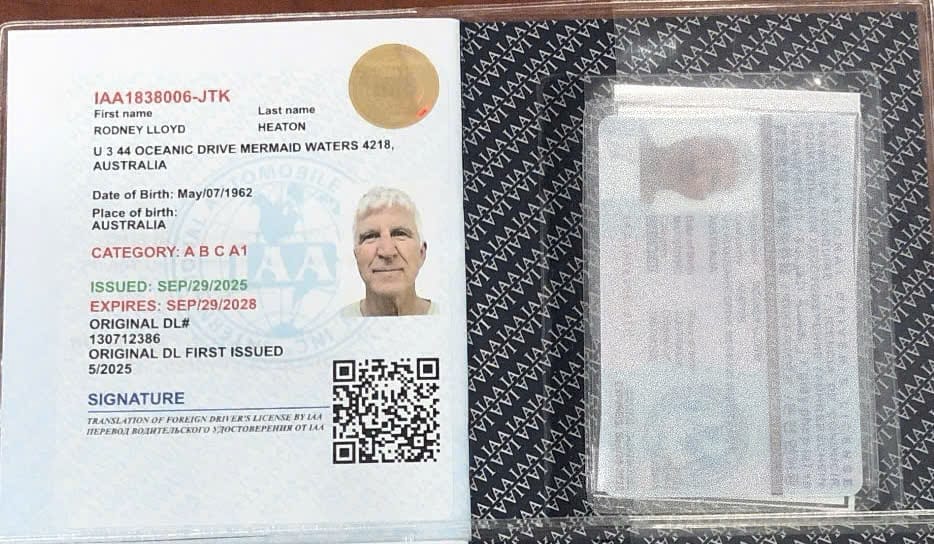
BUT the easiest way for all foreigners is to Convert Your Local License into an IDP (issued by International Automobile Association)
This converted IDP issued by International Automobile Association with validity of 3, 5, 10 & 20 years is widely accepted in Vietnam and legalized in more than 192 countries in the world
For those who have difficulties in converting their local licenses into the IDP, We normally suggest them to do this way because it’s much more simple & easy for all to carry out as we can execute it online under some following specific requirments:
- Your passport’s copy
- Your local license’s copy (back & front)
- Your selfie portrait
- Your signature on a white paper
All those documents will be sent us by emails or whatsapp then after 7 – 10 working days, we’ll get them all done and hand over to you when you land either in Hanoi or Ho Chi Minh city. In this way, you can ride comfortably in Vietnam
=> The conversion cost for a 3-year license is US$ 145
=> The conversion cost for a 5-year license is US$ 155
=> The conversion cost for a 10-year license is US$ 170
=> The conversion cost for a 20-year license is US$ 190
Riding Culture & Real-World Travel Tips for Vietnam
Beyond the legalities, riding in Vietnam is a deep cultural experience. The roads pulse with life — families of four balancing on scooters, vendors transporting whole fruit baskets, and seasoned riders flowing through traffic with intuitive rhythm.
Understanding Local Riding Style
Vietnamese riders rely on eye contact, body language, and predictable movement. Foreigners often try to “force” Western rules onto Asian traffic — which creates more danger. Instead, ride like the locals:
- Move steadily
- Avoid sudden stops
- Use your horn gently to signal presence
- Flow with traffic instead of fighting it
Riding in Cities vs Mountains
City riding teaches you patience and observation. Mountain riding teaches you respect for nature. On the northern loops, roads can be narrow and winding, with blind curves and sudden weather changes. But the rewards — terraced rice fields, limestone cliffs, ethnic minority villages — are unforgettable.
Why Guided Motorbike Tours Offer Additional Safety
Joining a reputable guided tour ensures:
- Legal, properly inspected bikes
- Experienced road captains
- Pre-checked accommodation
- Route planning adapted to weather
- Mechanical support
- Navigation and cultural insights
This is especially beneficial for riders unfamiliar with Vietnam’s terrain.

Conclusion: Ride Legally, Ride Freely, Ride Vietnam the Right Way
Vietnam in 2025 remains one of the world’s most extraordinary motorbike destinations. Its landscapes inspire, its roads challenge, and its people welcome you with warmth that stays long after the engine cools. But every great motorbike adventure begins with one essential foundation: riding legally.
Whether you rely on a 1968 IDP, convert your foreign license, or join a guided tour with full legal support, the goal is the same — freedom with peace of mind. When you know you’re covered by the law and protected by insurance, the entire experience becomes richer. Every mountain pass feels wider, every coastal breeze feels lighter, and every moment on the road becomes something you’ll remember for life.
Vietnam doesn’t just offer roads — it offers stories. And the best stories always begin when the rider feels safe, confident, and fully present.
Ride legally. Ride responsibly. Ride Vietnam — the way it’s meant to be experienced.
Looking for a Vietnam Motorcycle Tour or Ha Giang Loop Motorcycles Adventure?
If you want a fully legal, worry-free, professionally guided motorbike journey — from Hanoi, Ha Giang, Sapa, Ba Be, Ban Gioc, to the legendary Ho Chi Minh Trail — we’re here to make it happen.
✔️ Like-new Honda XR150 / CRF250 / CRF300
✔️ English-speaking local guides
✔️ All permits, paperwork & license covered
✔️ Hassle-free, safe & unforgettable riding
📩 Inbox us now for the best 2025 tour options
📞 Hotline: +84 904 124 997
📧 sales@indochinamotorbiketours.com
Your next great story in Vietnam begins with a single message. Let’s ride! 🏍️🇻🇳